

Termite Control & Treatment in Houston, Katy & Richmond, TX
Looking for the best termite treatment company in Houston, Richmond, or Katy, Texas? Life After Bugs is your fully licensed and trusted local pest control company. Schedule a free termite inspection to see if you need treatment.
Houston & Katy only · Same-week openings · Free quote · Licensed & insured
Where are you located?
Step 2 of 3So we can confirm we serve your area.
Free & no obligation · Takes 60 seconds · No spam
How much does Termite Control & Treatment cost in Houston and Katy?
There is no posted flat rate. Price depends on the size of your home, which pests you have, how heavy the pressure is, and whether you want a one-time visit or a monthly or quarterly plan. Every quote is free and no-obligation.
What's included in Termite Control & Treatment?
A licensed technician inspects, treats interior entry points and an exterior barrier, and walks you through what was applied and where. Recurring plans keep that barrier fresh; if pests come back between visits, so do we.
Can I get Termite Control & Treatment this week?
We call back usually within minutes during office hours and work to get Houston and Katy homes on the schedule the same week when a route is open. Call (832) 464-5870 or use the form on this page.
What area do you cover for Termite Control & Treatment?
Houston, Katy, and nearby west, north, and south Houston communities — including The Woodlands, Sugar Land, Pearland, Conroe, Cypress, Richmond, and towns in between.
Quick answer
Do you need termite treatment in Houston, Katy, or Richmond?
Looking for the best termite treatment company in Houston, Richmond, or Katy, Texas? Life After Bugs is your fully licensed and trusted local pest control company. Schedule a free termite inspection to see if you need treatment.
Updated October 2026
Family-owned termite control with experienced technicians
Looking for the best termite treatment company in Houston, Richmond, or Katy, Texas? Life After Bugs is your fully licensed and trusted local pest control company. We are a family-owned and operated pest control business, and our termite removal technicians are experienced at exterminating pests from homes and businesses.
Termite prevention
Termite prevention to keep your home and property termite-free.
Termite inspections
Termite inspections to see if you have an infestation.
Termite treatment
Termite treatment to bait, kill, and get rid of termites.
We also offer termite protection, including monitoring and baiting systems which are much cheaper than termite treatment. These systems ensure that if termite’s attack we will know about it right away and your L.A.B. Tech will be able to take immediate action.
Call NowCommon termites in the Houston area
Common termites in the Houston area include Drywood Termites, Formosan Termites, and Subterranean Termites. Many people mistake termites for flying ants, but their mistake could mean delays in treatment and unnecessary structural damage to your home. They could be termites, so be sure to get a professional pest control technician over to inspect your property and see if you need treatment. Contact us to schedule a termite inspection.
The signs our licensed technicians look for
The best way to identify a termite infestation is to have a professional, licensed pest control technician with experience finding and treating termites. We'll look for mud tubes, termite eggs, and rotten wood indicating active or past termite damage.
Swarms
The easiest way to identify the presence of termites is to actually see them. First, it's important to know that termites vary in appearance and change throughout their lifecycle. The lifecycle begins when reproductive males and reproductive females swarm (take flight in large groups) and mate. In Houston, termite swarms are usually triggered by warm weather and humidity, which generally occurs in late February or early March.
Identification
A common error is to mistake flying termites with flying ants. The distinguishable differences of the flying termites to winged ants are their wings and antennae structure. These termites have 4 wings of the same size with a straight antenna while the flying ants have arched antennae and 1 large pair of wings with another smaller pair underneath. Flying termites have a broader waist (compared to ants who have narrower waists) and look like thick grains of brown rice from a distance.
Discarded wings
Once termites have swarmed, they shed their wings and settle into their new nests. If you find large numbers of discarded insect wings in your home, along your window sills, near the foundation of your house or on your patio, it could be a sign that your home has become a termite breeding ground.
Visual
After the queen lays her eggs, they hatch into larvae which appear to be a pale white color. Over the course of several molts, these larvae grow to assume the role of one of the three termite colony castes: workers, soldiers and reproductive termites, also known as alates. Order isoptera are medium bodied termites with social tendencies that are present in the Texas Gulf Coast region in and around Houston. Each termite caste has a distinctly different physical appearance. Workers are pale in color and are sexually and developmentally immature insects that are responsible for constructing tunnels and chambers as well as feeding and grooming other termite castes. Soldier termites are yellow-brown in color, with dramatically-enlarged heads and mandibles. These are useful in combat but render warriors incapable of feeding themselves. The reproductive termites are black in color and are born with two pairs of wings.
Mud tubes
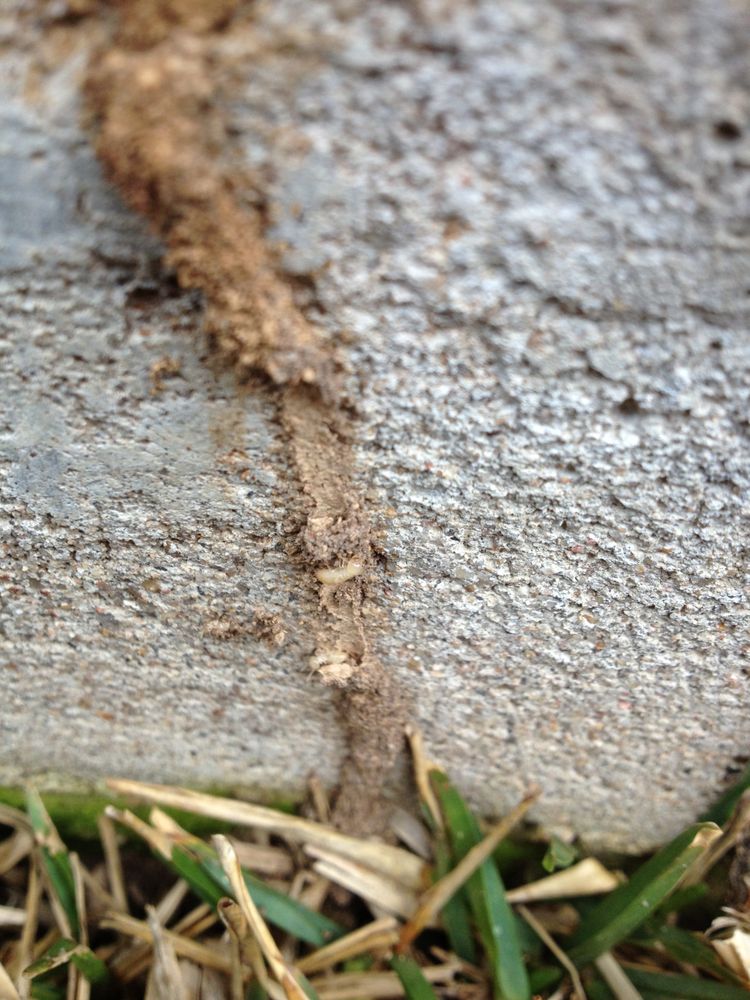
Subterranean termites create mud tubes which are external tunnels that allow termites to enter a home without being exposed to outside air. They are commonly called 'mud tubes' because they are made of mud, soil and termite feces. These tubes are commonly seen leading from the soil, up the cement foundation, and into the wooden structure of a home. Termites require a moist and warm environment in order to survive, and these tubes allow termites to travel back and forth from their nest to their food source.
Wood damage
Another indication of termites is damaged wood. The wood may sound hollow and may have holes or patterns that are not natural. There may also be evidence of a sawdust-like material around the infested area. Because termites live in wood frames and foundations, these signs may not be visible. Sagging walls, floors or ceilings, or discolored spots on wood, walls or drywall that look like water damage may all be signs of termite infestation.
How Sentricon baiting treats termites without trenching your yard
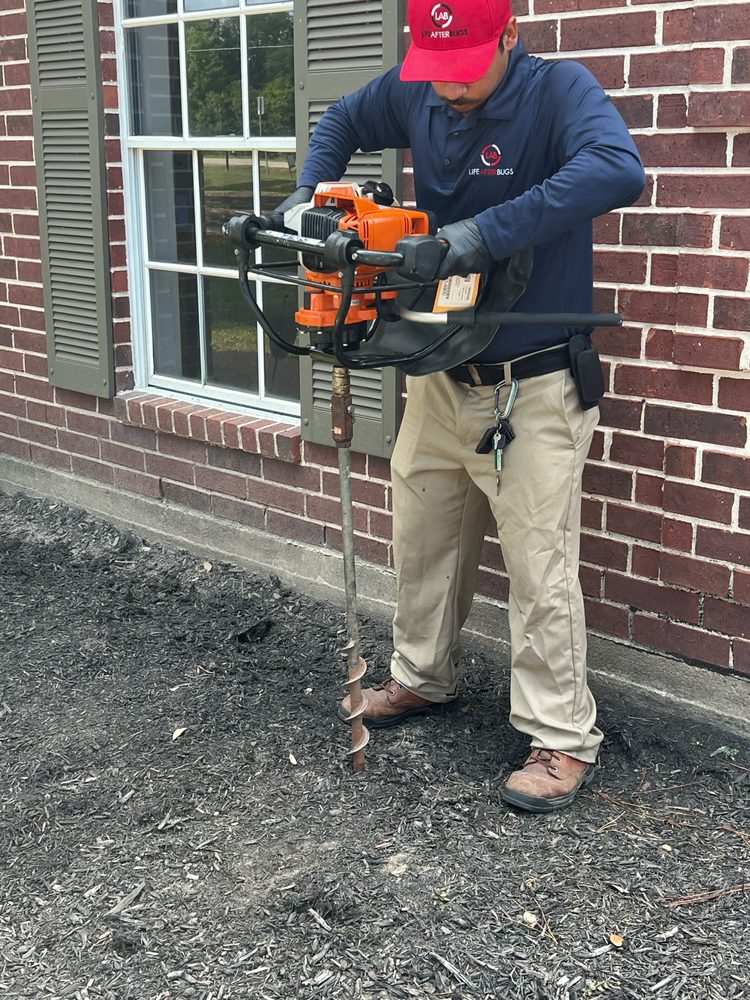
The Sentricon® System with Always Active™ places sealed bait stations in the soil around the structure instead of injecting a liquid barrier through a trench and drilled slab. Foraging termites carry the bait back to the colony, so the colony is eliminated at the source, and the stations stay in the ground for ongoing monitoring rather than being reapplied on a schedule. Your technician places and services every station, and no digging up of your landscaping is required. Contact us to schedule a free quote for termite prevention and treatment service.
| Sentricon System advantages over traditional liquid | Sentricon | Liquids |
|---|---|---|
| Eliminates the termite queen | Routinely | Occasionally |
| Treatment might be disruptive to home, lawn and landscaping | No | Yes |
| Scientific studies documenting colony elimination | 60+ | <5 |
| Tangible and visible evidence of protection | Yes | No |
| May need booster treatments | No | Yes |
| May impact water sources and wells | No | Yes |
| Notifies/informs of future termite activity | Yes | No |
| Treatment is removable | Yes | No |
The Sentricon® System with Always Active™ eliminates the termite queen, so the entire colony collapses. Stations go in the soil around the structure, with no trenching or slab drilling and no disruption to your home, lawn, or landscaping.
Houston's climate is an ideal breeding ground for termites
Termites are like the IRS, you don’t hear from them until they’re taking over your home and emptying your bank account. They are found particularly in tropical and subtropical environments. Unfortunately the heat, humidity and temperate winters we experience in Katy and the greater Houston area, make it an ideal breeding ground for termites.
Frequently asked questions
The most common indications of termite infestation are swarming and mud tubes. Mud tubes are a telltale sign of a termite infestation that you are more likely to experience in person. Termites build mud tubes they use as sheltered highways to travel between their nest, path to wood, and soil. Mud tubes provide shelter from the elements, allowing them to go somewhat undetected unless someone knows what they look like.
Mud tubes are about a third to half an inch wide and light brown in color. Termites build the tubes using tiny pieces of digested wood, soil, and a glue-like substance secreted from their mouths. Imagine drawing a line of Elmer's glue from art class, but instead of glitter you sprinkle it with sawdust. That is what mud tubes look like; lines of glue covered in saw dust.
The only termite species that create mud tubes to travel between their food source and nest safely are subterranean termites. There are two types of subterranean termites in the Texas Gulf Coast area and both pose a serious threat to homes, trees and wooden structures; native subterranean termites and Formosan subterranean termites.
The time of year with the most termite activity is early spring in Texas and the southwestern United States. In March termites swarm, flying in a large cloud-like pattern to mate. If you witness any large flying ants swarming in the springtime you should call your local pest control company ASAP to rule out the possibility of an infestation.
Catching an infestation early on will save you thousands of dollars in damage, and depending on the scale and duration of the infestation it could go into the tens of thousands when the home's support beams and wooden structures are compromised by termite tunnels. Once termites are identified by a professional exterminator, your home can be treated and install termite baits to prevent any future infestations.
Protect your biggest investment
Contact Life After Bugs by calling us or sending us an email to request termite service or a free termite inspection at your home or commercial property. Whether you’re buying a new home and want to make sure it’s not actively infested, need a one-time treatment to remove a termite infestation, or want to protect your biggest investment with a treatment to defend against termite invasion, Life After Bugs has a solution that will work for you.
Ready to defend your home from termites?
Schedule a free termite inspection with Life After Bugs.